Science Fair Project Ideas That Use Real Physics

A levitation project stands out at a science fair because nothing else on the table is doing it. The catch is that the best version needs liquid nitrogen, and the version that needs none is a different project with different physics. This page sorts out which one you can actually build, then covers the planning, safety and presentation that decide your score.
Three projects, sorted by what you can get hold of
Start here: six ways to demonstrate levitation
An overview of the whole field — still magnets, ring magnets, DIY tracks and three superconductor demonstrations. Read this first if you have not settled on a project yet.
Maglev train — no liquid nitrogen
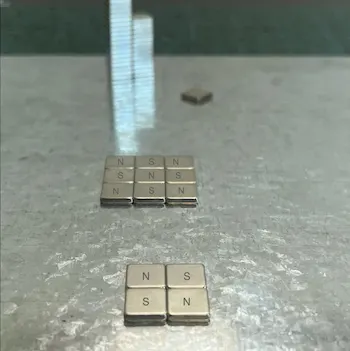
Permanent magnets and a guide-walled track. Buildable in any classroom with no cryogenics and no special safety approval. Best suited to demonstrating friction, load and the limits of magnetic stability.
Superconductor hoverboard — needs liquid nitrogen
A YBCO disc cooled to −196 °C locks above a magnetic track and stays there at any angle. This is true stable levitation and it wins fairs, but you need a supply of liquid nitrogen and an adult supervising.
Which one should you pick?
Start with the liquid nitrogen question, because it decides everything else. If you can get a few litres through a school lab, a university department or a local welding or medical supplier, build the superconductor project — it demonstrates a genuine quantum effect and there is no way for a judge to mistake it for a trick. Our liquid nitrogen guide covers where to buy it and how to transport it.
If you cannot, do not treat the magnet project as a consolation prize. It answers a real engineering question — why do trains have a speed ceiling, and what happens when you remove the wheels — and it gives you something the superconductor project does not: a quantity you can vary and measure repeatedly in an afternoon.
Planning it properly
Judges reward a question with an answer, not a demonstration. Before you build anything, write down the variable you are going to change, the quantity you are going to measure, and what you expect to happen. A project that measures levitation height against load and plots the curve beats a project that simply makes something float, every time.
Then plan the practical side:
- The steps of the experiment, in the order you will run them
- Every material and instrument, including the ruler or scale you will measure with
- How many times you will repeat each measurement — three runs minimum, so you can show your results are not a fluke
- How you will record results as you go, rather than reconstructing them afterwards
- A realistic timeline, working backwards from the fair date
Do a literature review before you start, too. Knowing that Earnshaw’s theorem forbids stable levitation with permanent magnets alone, or that flux pinning is what holds the superconductor in place, turns a demonstration into an explanation — and judges ask exactly these questions.
Safety comes first
The magnet project has two hazards worth naming in your write-up: strong neodymium magnets can pinch badly when they snap together, and they will erase cards and damage phones and hard drives kept nearby.
Liquid nitrogen needs more care. It boils at −196 °C, so it causes cold burns on contact, and it displaces oxygen as it evaporates. Handle it with an adult present, in a ventilated room, wearing eye protection and insulated gloves, and never seal it in a closed container. The handling guide covers storage, transport and what to do if it spills. Schools running this as a class activity can also use our institutional ordering route, which includes a risk assessment template.
Presenting to the judges
Lead with the question, not the apparatus. Show your data — a graph beats a photograph — and be straightforward about what your setup does not prove. If your maglev train relies on guide walls for stability, say so and explain why the physics requires them. Admitting a limitation and explaining it reads as understanding; hiding it reads as not knowing.
Practise the demonstration until it works reliably, and have a plan for when it does not. Judges will ask why it works, so rehearse that answer in plain language before you rehearse the technical version.
The physics behind it
If you want to understand what you are demonstrating, the Meissner effect versus flux pinning explains why a superconductor holds its position instead of sliding away — the two are routinely confused, and getting it right will distinguish your project. What superconducting levitation is covers the underlying mechanism, and The Physics collects the rest of our explanatory articles.